
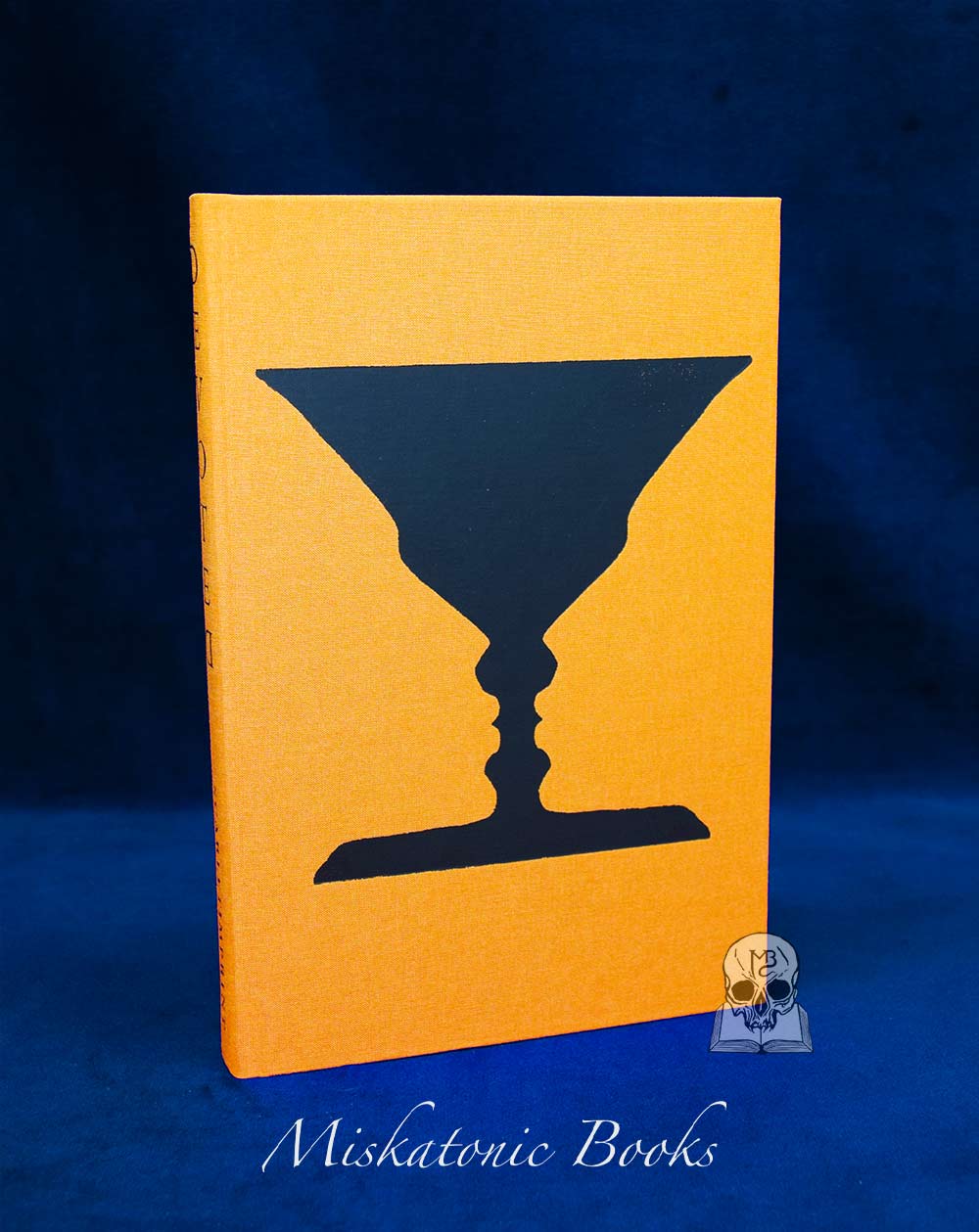
We are neighbours of the uncanny. The names, cosmologies and ritual worlds gathered in Devoted are not always mine, yet the gestures belong to a neighbourhood I recognise. I know it in the small act of remaining before an icon of the Mother and Child, striking a match and lighting the candle before I begin to pray. The flame adds nothing that can be measured. The prayer would not be quite the same without it. The body has performed an appointed act, and attention is gathered into light before the words begin. This is the world of the gesture repeated until it begins to shape the person, of the offering whose meaning lies partly in being offered, and of the sense that something has addressed us before we have chosen the terms of our answer.
The book's chief strength lies in the position from which its contributors write. They write from within their devotions rather than observing them from a safe distance, and so they tell us what they do, whom they address, what their practice asks of them, and why they return. What emerges is not a shared doctrine but a series of lives formed around the possibility that the act is received, that repetition enters into relation, and that the world contains more agencies than a settled inventory would allow.
The thought that accompanied me through the book was a question of awareness. Roberto Calasso draws a distinction that helped me to name what I was encountering: ritual seeks perfect awareness, while procedure drifts towards automatism. This distinction is exact for a time when procedures multiply, requiring us to perform more and more actions with diminishing attention to their meaning. Yet the phrase perfect awareness brings its own difficulty. By it I take Calasso to mean not an exalted state of consciousness, but a ritual attention in which gesture, object, intention and circumstance are held together, so that the act is neither blind nor severed from its meaning.
Awareness may intensify without becoming more truthful, and one may see with great lucidity and still misread what is seen. What comes up when the ordinary surface yields may not answer to the first name given it.
When a practice opens a person, what receives the opening, and by what light is the address to be recognised? The mirror-barrier, the Little Office and, finally, Mary do not settle that question so much as suggest ways of remaining within it. They offer practices by which attention may be gathered, tested and given a form: standing before an image, lighting a candle, returning to words that precede one's present mood, allowing repetition to disclose rather than merely confirm. These are not prescriptions. They are invitations to notice what changes when awareness is placed within a form capable of answering it.
The question became clearest for me in Alkistis Dimech's account of the mirror-barrier. By disciplined repetition, she suggests, the body can cease to inspect itself from outside. The socially conditioned voice that ordinarily intervenes between impulse and movement begins to fall silent, and the body acquires another freedom.
The barrier she describes is not an occult curiosity yet a condition most of us now inhabit. In a connected life, the possible audience has entered the private room. Before an act is completed, one imagines how it might appear, how it might be explained, diagnosed, or mocked; one hears oneself praying as another might hear it, and sees oneself kneeling as another might see it, so that the act becomes divided between what it is and its anticipated reception. Beneath this lies a further layer, in which the need for devotion itself comes to feel like evidence against the one who needs it. Society has been carried inward until its imagined gaze begins to resemble an invisible witness, and one no longer kneels before God while enduring the judgement of others, but kneels before their anticipated judgement while attempting to address God at all. Dimech names the wall exactly. Her practice is a serious attempt to pass through it.
Yet the matter does not end with the breaking of the wall. When the body is no longer held below its own gaze, what receives it? The absence of the social spectator creates a space, but a space is not yet freedom. The suspension of self-observation releases attention. It also leaves the person exposed to whatever enters the cleared room. What matters is not simply that self-consciousness has been set aside, but the kind of relation that becomes possible in its absence.
This suggests several modest criteria of discernment. A practice that opens attention should also return the person more truthfully to the world. If, after prayer before an icon, lighting a candle and reciting the Little Office, I am more able to attend to another person, to keep an obligation, or to bear discomfort without withdrawing into fantasy, then the practice has enlarged freedom rather than merely intensified experience. The test is not the force of the moment itself, but the kind of life it makes possible afterwards. An opening may become hospitable. It may only leave the door unguarded.
Jake Stratton-Kent's contribution led me towards the same question from another direction. He observes that remarkable spiritual work rests upon an ordinary and usually hidden cycle of devotional labour. Beneath the striking act lies the repeated act; beneath revelation lies return. Whatever else devotion may contain, it must survive the days on which nothing remarkable happens.
My own hidden cycle is the Little Office of the Blessed Virgin Mary. It receives me in the evenings especially, after my intentions have weakened, and asks for no novelty, no intensity, no convincing spiritual mood. This has been a hot summer, and there is a Vesper quiet into which, even in the heat, the sound can rise. It returns me to words not written for the present weather of my emotions. I pray them in Coverdale, an English four centuries older than my mood, and in doing so I am released from the need to originate my prayer.
The canticles remain. The Magnificat does not wait until I am worthy to speak it. The Benedictus and the Nunc dimittis are already there, carrying their own time and asking me to enter it. Through repetition, a private life is gradually placed within scriptural time, while distraction, shame, enthusiasm and fatigue move around the appointed words like weather over stone. Repetition of this kind is hardly rare; formalised and repeated acts persist everywhere, and the question is never whether human beings repeat but what their repetitions make present. The Office answers in a particular way. Its repetitions make present a time that is not mine, and they do so whether or not I arrive in a condition to notice.
There is freedom here, though not the freedom that comes from formlessness. It arises when one is no longer required to generate every spiritual movement from within. Simone Weil's language of decreation is helpful, provided it is not confused with a summons to emptiness or a passive waiting for whatever power might appear. The surrender asked is more exacting. It is the relinquishing of the claim to be one's own origin, so that the person may be received into a mystery already at work.
The stability of the Office also guards against treating each movement of the psyche as revelation. Its words interpret me before I begin to interpret them. They neither deny experience nor permit experience to become its own final authority.
Cantillation deepens this bodily form of repetition, and so does the small teardrop dulcimer on which I have begun to adapt the psalm tones. Breath, pitch, tempo and touch are given a path. There is a note to sound, a phrase to carry, and an ending towards which the voice may move. Technique does not decorate the prayer from outside. It helps the body remain within it.
Here the practices described in Devoted drew nearest to my own life. Its contributors understand that repetition alters perception, that prescribed gestures instruct the body, and that sound may carry a person beyond the reach of transient feeling. Yet this nearness did not dissolve the differences between traditions; it made them more distinct. Practices that resemble one another outwardly may be ordered towards very different ends. They may presume different accounts of the self, of divine agency, of the body, and of what liberation or holiness requires. The Christian emptying of self is not simply the overcoming of ego, but a consent to receive one's life from God and to return it in love. Decreation, in this sense, does not erase the person; it loosens the fantasy of self-possession so that creaturely freedom may become more truthful. Nor does every release from self-consciousness lead to freedom. The question is what relation the practice establishes. Does it enlarge attention or only intensify it? Does it deepen contact with the world or offer a way out? A practice may make one more able to love and to choose. It may make one more dependent upon intensity.
My Christian difference does not begin by denying the seriousness of ritual or the reality of the invisible. It begins with the conviction that the circle of ritual, sacrifice and return is open, because it has been entered by an event it could neither summon nor contain. In the coming of the Son, the divine does not remain at the circumference as the power towards which offerings rise. It enters the circle, undergoes its violence, and opens recurrence towards fulfilment. This is a wager, and I hold it at the same reserve I will shortly praise in Mary.
It does not make every ritual a concealed form of Christianity, nor every devotional presence another name for Christ. It means that no ritual world can be entirely self-enclosed, just as Christian practice itself cannot claim immunity from error, fantasy, or possession. Something may have exerted a real force upon the body and imagination while still being misunderstood. An encounter may be genuine as encounter even when its first interpretation is not. The invisible may be real without being innocent.
The book returned me, in this way, to the thought that devotion begins in address. Before it becomes a discipline selected by the self, something has already approached, whether as name, image, word, obligation, face, or presence. Practice is the continuing form of the answer, and Devoted seemed strongest to me where it showed spiritual life not as self-expression or private symbolism, but as response.
Yet not every address deserves consent. A summons may be vocation or seduction; a presence may invite relation or capture. Sincerity cannot settle the matter, nor can intensity. This is where the question I have been carrying finds its Marian form. Mary is not an abstraction in my devotional life but someone addressed by name, borne in images, and returned to through feasts and hours, yet her presence does not close upon itself. She receives and bears the Son. Her intimacy does not consume the person who approaches her, and her power does not depend upon possession. Before her image I strike the match, and the look I bring does not stay with her; the Magnificat she hands me magnifies the Lord and not herself, and by it I am turned past her and given on.
Mary also helps me distinguish reserve from shame. Shame allows an imagined audience to determine what may be loved. Reserve protects a relation from compulsory exposure. She keeps and ponders, but she also sings aloud. The question is not whether devotion must be private or public, but how it may be spoken without becoming a performance of the self.
Several contributors to Devoted write about the difficulty of speaking at all. Richard Ward doubts not the reality of his devotion but his ability to communicate it without falsifying it. Ruby Sara finds a partial answer by allowing language itself to become part of the offering. Their contributions made me wonder what a faithful account of devotion might sound like. It would need to avoid romantic enlargement and embarrassed erasure alike. To say that I light a candle before an icon before beginning the Little Office is simple enough; to explain what that act gathers, permits and addresses is harder. A faithful account would have to say: this is what I encountered; this is what I thought it meant; this is what remains; and this is how I understand it now.
That is also the purpose I imagine for these Green Books. They will not be reviews in the strict sense, nor attempts to provide a complete account of each book. They are records of thoughts opened by particular works, especially books concerned with ritual, secrecy, sacrifice, altered perception, and the human wish to approach what exceeds us. I keep them above all for readers who have stood inside such rooms and cannot pretend they were empty, though what they now understand to have addressed them there may have changed. Such books need not be accepted whole in order to be read seriously, nor dismissed because their account of the invisible differs from mine. A record can be preserved without being left to interpret itself.
For me, the Little Office is where these questions become embodied. It offers another way of understanding repetition and awareness, not as the conquest of an altered state but as participation in a form that is not one's own possession. The search for perfect awareness must remain a search. Christian perfection is not the securing of perception as private property, nor the capacity to see all things without remainder. It is participation in a light that is received, not mastered. The aim is not to become invulnerably lucid but to see more truthfully, to be opened without dissolving, to consent without being taken captive.
When Devoted is closed, its voices persist, with the practices, names and encounters they describe, and with the questions they have opened. The record is preserved with those questions still standing, and the appointed canticle receives it without adjudicating it. Breath is gathered, the string is sounded, and the work of attention begins again.